Singapore Faces Strain On Donor Supply As Organ Transplant Needs Outpace Deceased Donations
WORLD NEWS – SINGAPORE: More than 500 patients are currently waiting for vital organs, and only a fraction receive the gift of life each year. For kidney transplants, just 10% of those in need were transplanted last year, with an average waiting time of nine years. The scale of unmet demand frames an urgent national conversation about donation and the systems that must coordinate it.
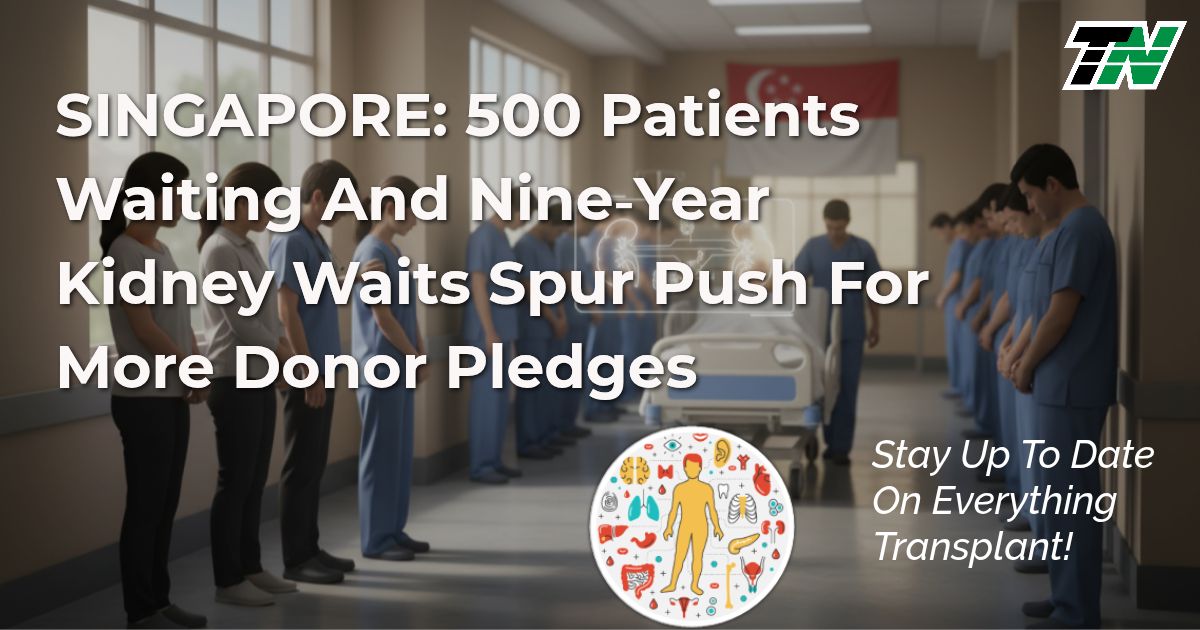
Hospitals stage ceremonial final passages known as honor walks as part of end-of-life care, wheeling patients certified brain-dead into operating theaters while staff line corridors to pay tribute and support bereaved families. A single deceased donor has the potential to save up to seven lives, yet Singapore’s annual number of deceased donors remains in the low double digits, making every case heavily coordinated across multiple clinical units to maximize outcomes while respecting donor and family wishes.
Organ donation is governed by two statutory systems. The Human Organ Transplant Act covers kidneys, liver, heart and corneas and operates on an opt-out basis for citizens and permanent residents aged 21 and above, with an opt-out rate steady at about 3% annually. A separate Medical Therapy, Education and Research Act permits people of any nationality aged 18 and above to pledge other organs, tissues or their whole body for transplantation, education or research; roughly 800 individuals have pledged each year on average over the past five years.
Officials caution that donation cannot proceed in every case due to medical unsuitability or the absence of next-of-kin consent under the pledging scheme, highlighting the need for timely family conversations. The national transplant unit is investing in staff training to integrate organ donation into compassionate end-of-life discussions. Brain donations are managed jointly by the national unit and a brain bank. In parliamentary exchanges this year, a legislator and neuroscientist called for a single consolidated registry; the health ministry said existing registries are coordinated and there are no current plans to merge them, while acknowledging gaps in public knowledge that, if addressed, could increase pledges and save more lives through transplantation.
LIVING DONOR GUIDANCE
If this story involves a need for a living donor and you are interested in exploring giving the Gift Of Life to that person, or you just want to explore living donation for someone in need, click below to get started.
Or copy and paste this link into your browser:
https://nkr.donorscreen.org/register/now?src=txpnews
For reference, copy and save this story’s URL in the address bar if you are exploring donating to the person featured.
Thank you for considering becoming a living donor and giving the Gift Of Life. 💚
All potential donors undergo medical evaluation to determine eligibility.