New York City Teen Seeks Living Donor As stem cell transplant Looms
USA: A New York City father has mounted a high-profile social media appeal to find a living donor for his 15-year-old son, who faces a rare blood disorder that must be treated with a stem cell transplant within months to avoid progression to MDS or AML, serious forms of blood cancer. The family urgently needs a match by April 1, and clinicians say a perfect match would yield a five-year survival rate of about 95 percent. Even the boy’s twin sister is not a compatible match, intensifying the search.
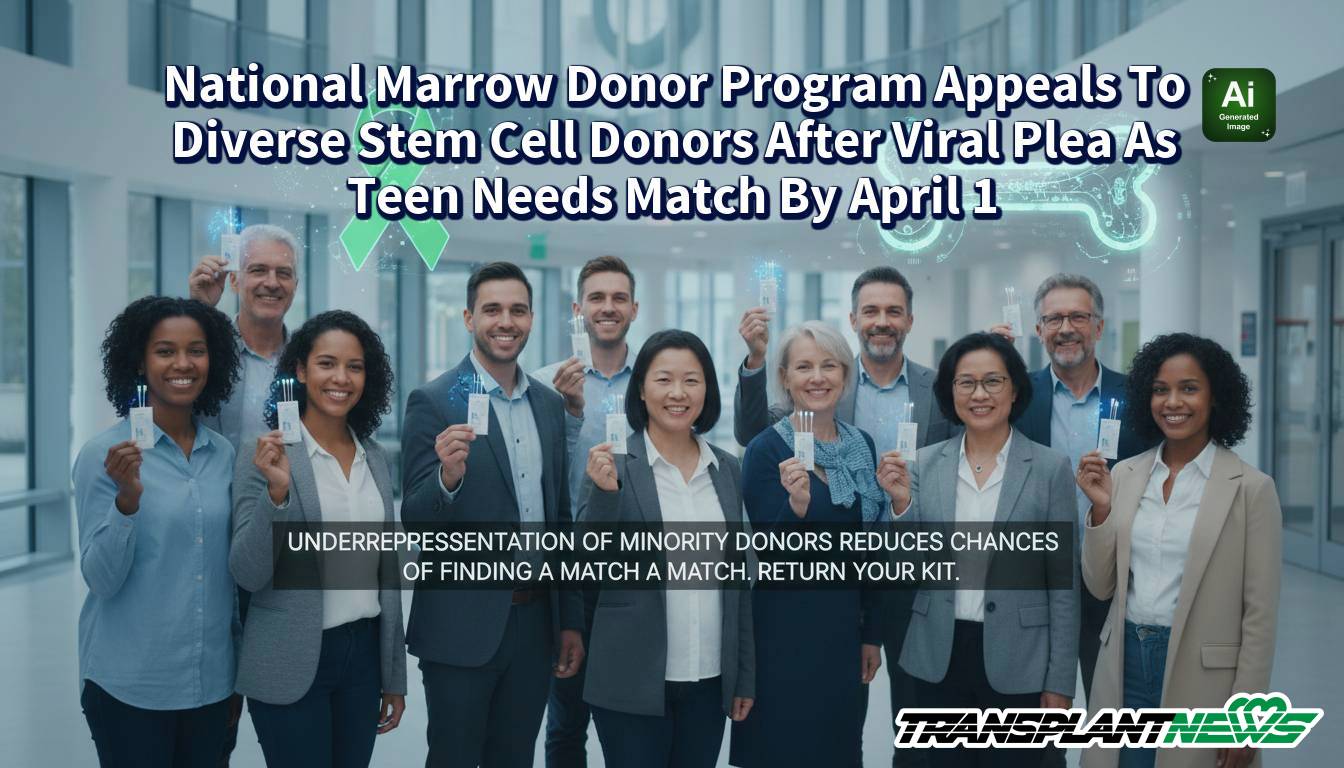
The plea has gone viral, attracting some 19 million views and prompting more than 20,000 people to request cheek swab kits. Organizers and the National Marrow Donor Program have established a dedicated registry page for the case and are stressing that the effort is not only about this teen: roughly 12,000 people in the country each year depend on stem cell transplantation. The family highlights an added challenge — the patient’s Colombian heritage — underscoring how underrepresentation of Hispanic and other minority donors reduces chances of finding a match. Experts note matching odds of about 80 percent for white Americans, roughly 50 percent for Hispanic/Latino patients, and approximately 30 percent for African-American patients.
Medical teams and the donor registry are urging everyone who requested a kit to return their cheek swab promptly so laboratory testing can determine compatibility. If a potential donor is confirmed, most donations — about 90 percent — take place through peripheral blood stem cell collection. Donors receive medication to mobilize stem cells into the bloodstream and then undergo apheresis, a two-arm outpatient procedure performed while awake.
Advocates say the case spotlights a systemic need for more diverse registered donors to improve outcomes for patients of all backgrounds. The registry emphasizes rapid response, careful testing, and clear clinical pathways for confirmed matches as the clock runs down toward the critical transplant window.
Video originally published on 2026-02-16 20:05:18
🚨 LIVING DONOR GUIDANCE 🚨
If this story involves a need for a living donor and you are interested in exploring giving the Gift Of Life to that person, or you just want to explore living donation for someone in need, click below to get started:
Or copy and paste this link into your browser:
https://nkr.donorscreen.org/register/now?src=txpnews
Copy and save this story’s URL from the address bar
if you are interested in donating to the person featured.
Thank you for considering becoming a living donor and giving the Gift Of Life. 💚
All potential donors undergo medical evaluation to determine eligibility.