Threefold Increase In Organ Procurement Among Euthanasia Deaths Observed In Several Countries
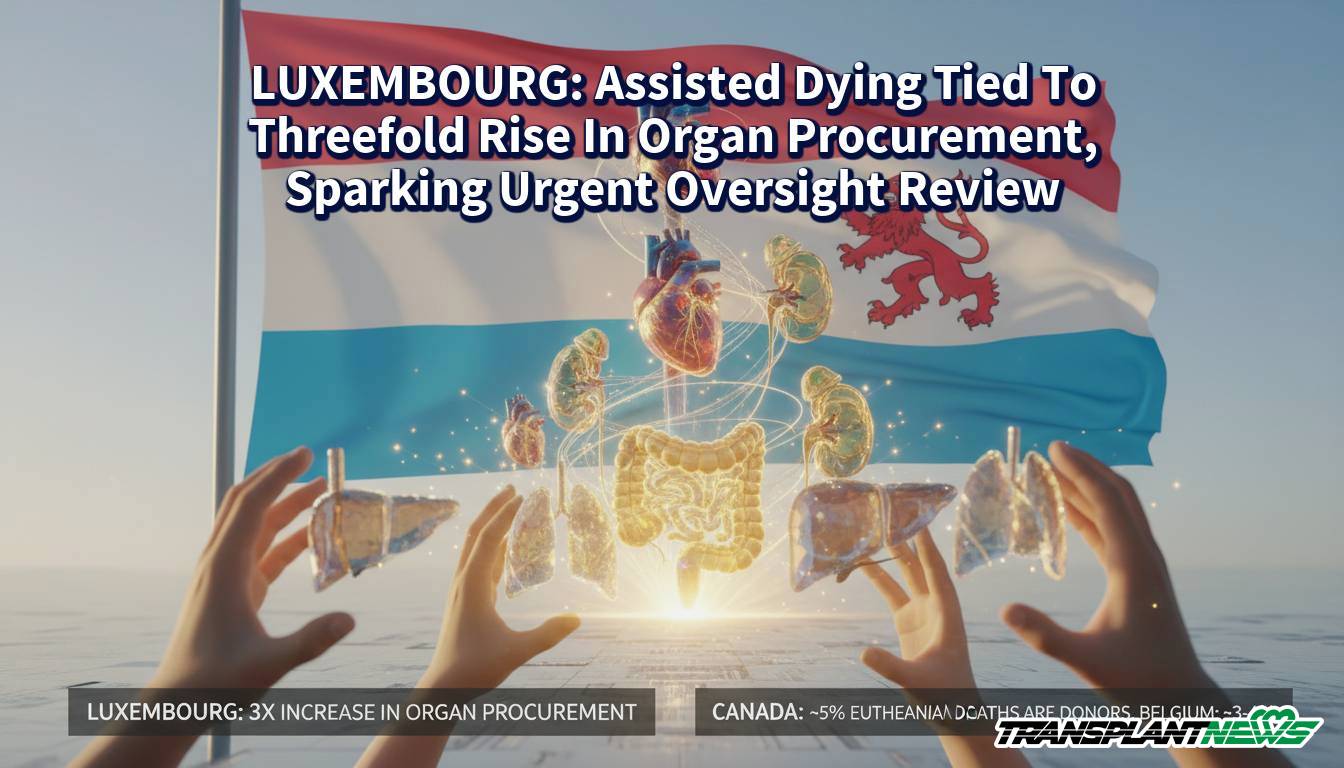
WORLD NEWS – LUXEMBOURG: Health observers and hospital staff in Luxembourg say jurisdictions that have legalized voluntary end‑of‑life measures are seeing a striking reshaping of organ donation and transplantation practice. Reported proportions of deaths involving legally authorized euthanasia reach roughly 5% in Canada and about 3–4% in Belgium, and clinicians note that the wider acceptance of these end‑of‑life options is coinciding with a sharp rise in organ procurement from those deaths. Transplantation teams are increasingly being able to coordinate timing and logistics around planned deaths, creating new possibilities — and new dilemmas — for organ and tissue donation.
Doctors and policy analysts describe a normalization effect: when euthanasia is lawful and integrated into care pathways, conversations about donation surface earlier and more often in the dying process. That shift has been linked to a roughly threefold increase in organ procurement from patients who undergo legal end‑of‑life procedures compared with other categories of death. Because the date and time of death can be anticipated under these protocols, transplant coordinators can arrange operating rooms, retrieval teams, and recipient matching with an unprecedented degree of predictability, affecting how transplant services allocate resources and schedule operations.
The rapid operational gains for transplantation networks are matched by ethical debate in hospitals and health systems across Europe and North America. Clinicians in Luxembourg and elsewhere report that the prospect of procuring organs after a planned end‑of‑life procedure is prompting renewed scrutiny of consent practices, the sequencing of end‑of‑life conversations, and the boundaries between offering palliative options and discussing donation. As procurement for transplantation becomes more feasible in these contexts, policymakers, transplant programs, and clinical teams face urgent questions about safeguards, patient autonomy, and how to balance the clear public health benefits of increased organ availability with rigorous protection of vulnerable patients.
Video originally published on 2026-01-28 05:57:55
LIVING DONOR GUIDANCE
If this story involves a need for a living donor and you are interested in exploring giving the Gift Of Life to that person, or you just want to explore living donation for someone in need, click below to get started.
Or copy and paste this link into your browser:
https://nkr.donorscreen.org/register/now?src=txpnews
For reference, copy and save this story’s URL in the address bar if you are exploring donating to the person featured.
Thank you for considering becoming a living donor and giving the Gift Of Life. 💚
All potential donors undergo medical evaluation to determine eligibility.