
Region’s First Robotic kidney transplant Promises Faster Recovery And Fewer Wound Complications
USA: Surgeons at the University of Alabama at Birmingham completed the region’s first robotic kidney transplant on January 15, a procedure that replaced the traditional open incision with robotic-assisted precision. The operation was led by the program’s surgical director, Dr. Michael Hanaway, with Dr. Muhammad Rabbani assisting; both physicians guided robotic arms from a console while instruments worked through small ports placed on the patient. Hospital leaders say the team had been preparing for the new approach for about 18 months and that the initial case went better than anticipated.
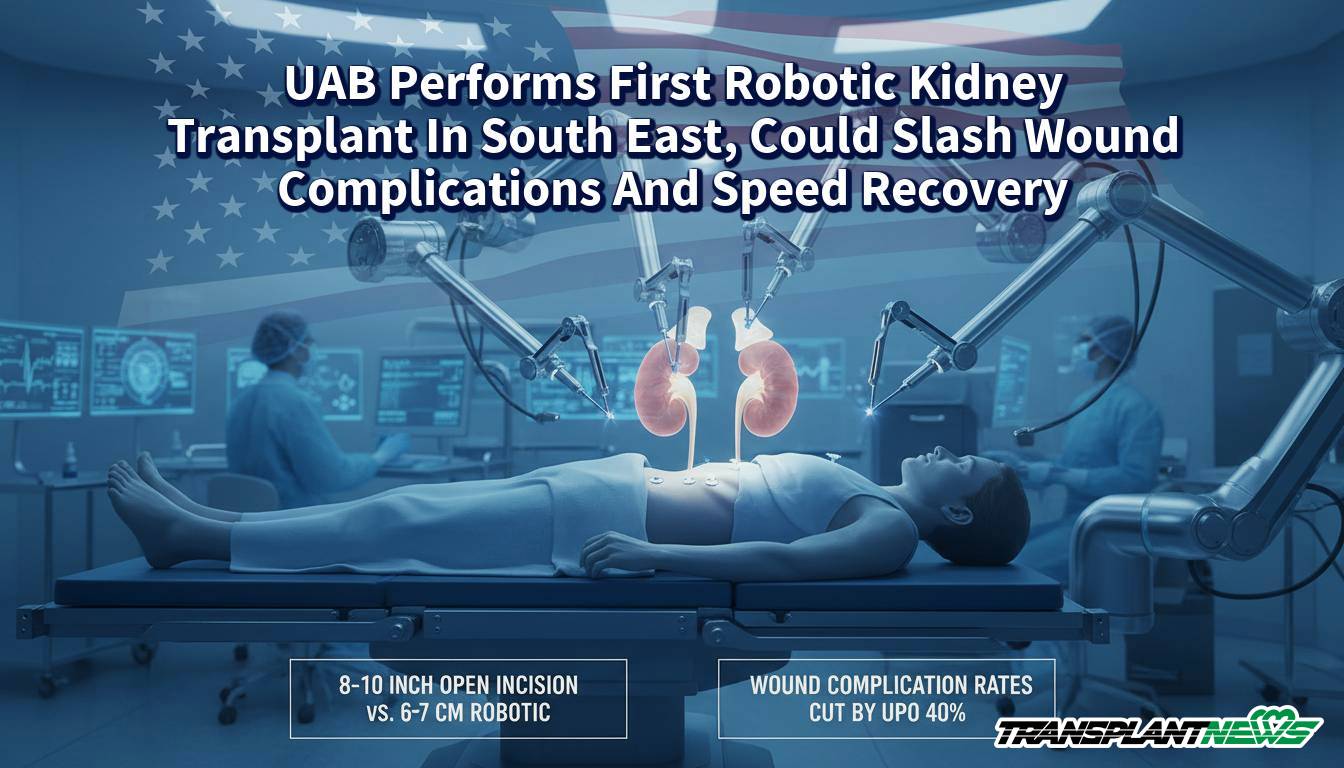
The robotic technique dramatically reduces the size and number of cuts. Where conventional kidney transplants typically require an 8–10 inch abdominal incision, the robotic method uses a 6–7 centimeter periumbilical incision plus two to three small additional access points. That smaller footprint is central to the reported benefits: markedly less postoperative pain, faster mobilization, and an expectation that patients will be able to leave the hospital essentially pain-free within four days.
Physicians emphasized the potential impact for the local patient population, noting that higher body mass index is common in the state and that wound complication rates after open surgery can reach 30–40 percent in such patients. According to the surgical team, the robotic approach appears to dramatically reduce those wound-related complications. They also pointed to generational change in surgical training—newer surgeons are increasingly experienced with robotic platforms—which supports a prediction that most kidney transplants at the center will be performed robotically within the next five years.
If adoption follows early results, the shift could reshape regional standards of care for kidney transplantation by shortening recovery times, lowering complication rates, and broadening access to transplantation for patients previously at higher surgical risk. The move also underscores growing reliance on robotic-assisted surgery as transplant centers modernize their programs and train the next generation of surgeons.
Video originally published on 2026-01-28 19:05:42