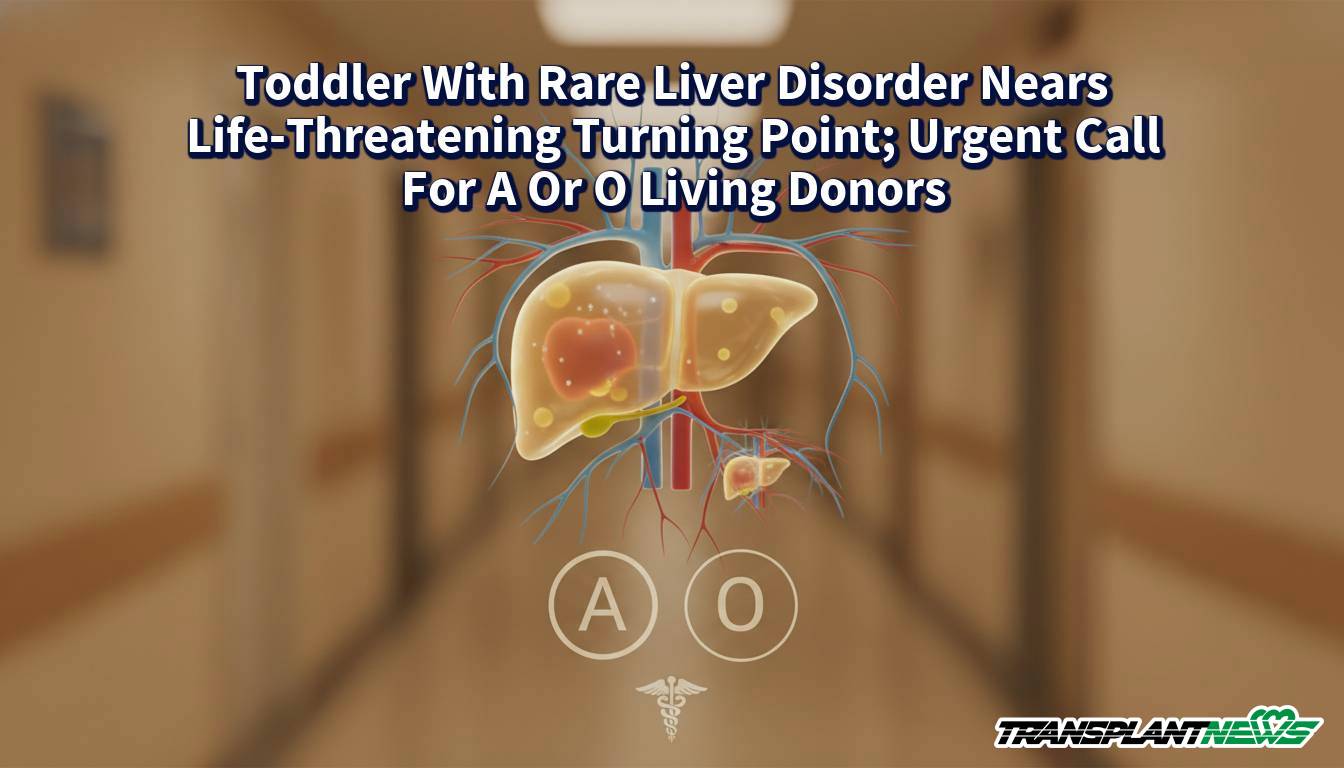
toddler With Rare liver Disorder Urgently Needs Transplant; Family Seeks Matching Donor
USA: A small child from Abington has been diagnosed with ornithine transcarbamylase (OTC) deficiency, a rare genetic liver condition that prevents the organ from clearing toxic ammonia from the bloodstream, and now faces an urgent need for a liver transplant to avert potentially irreversible neurological damage or death. The condition was identified after repeated unexplained episodes of sleepiness and illness; specialists at Johns Hopkins confirmed the metabolic diagnosis and concluded transplantation is the critical next step to stabilize the child’s health.
The family has launched a public appeal for a compatible living donor after exhausting other diagnostic routes. The child’s parents are prepared to donate but medical teams warn that the youngster’s very small blood vessels and young age make parental donation technically difficult. Johns Hopkins is coordinating the transplant pathway and evaluating potential donors for suitability; the aim is to secure a timely, size-appropriate liver graft to normalize ammonia processing and prevent further neurological risk.
There is an urgent emphasis on finding a biologically compatible volunteer. Potential living donors must have blood type A or O, either positive or negative, and can choose to register through Johns Hopkins to be evaluated specifically for this child. The family has set aside privacy concerns and is actively appealing to the broader community to identify a donor match quickly, while clinicians prepare for the complex logistics of pediatric transplantation and post-operative care.
Living Donor Guidance: Potential donors should have blood type A or O (positive or negative). Donors can elect through Johns Hopkins to be evaluated and matched specifically for this child. Parents have volunteered but may not be suitable due to the child’s small vasculature and age.
Video originally published on 2026-01-15 15:00:23