
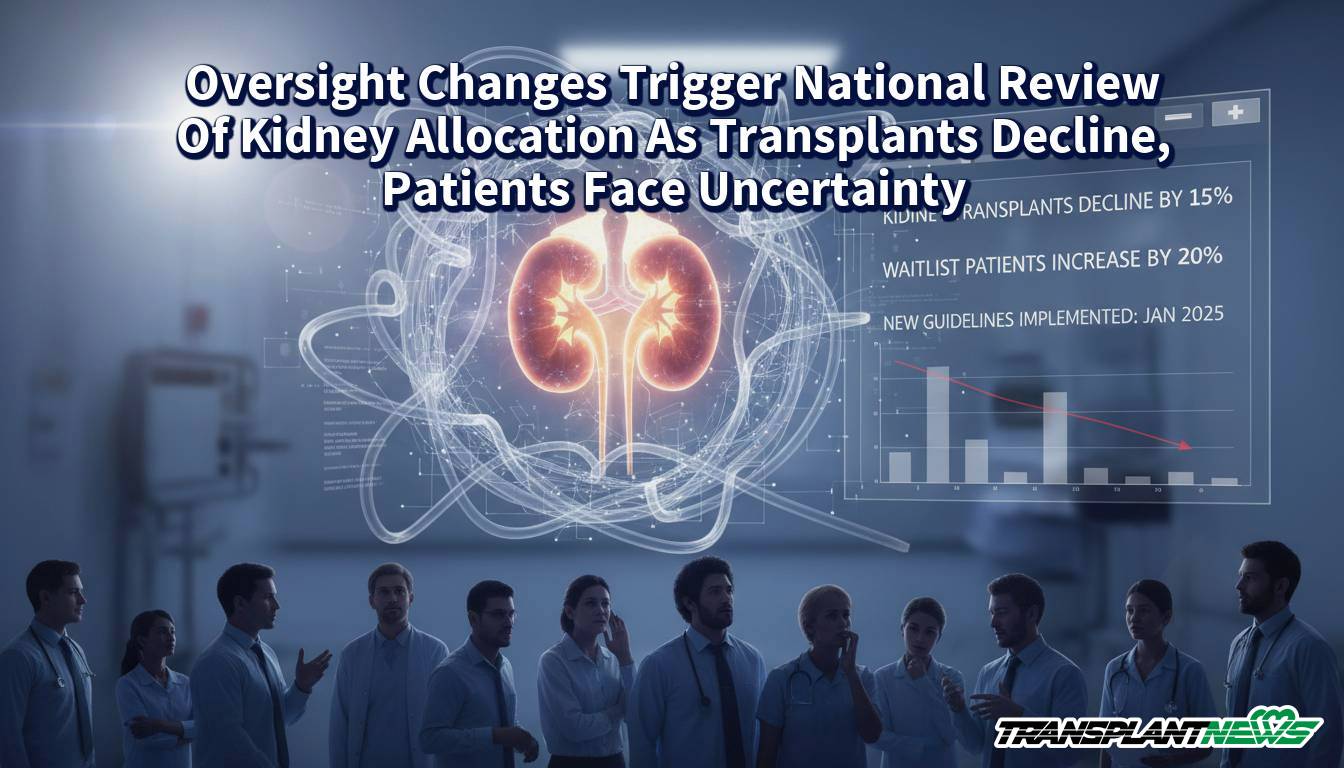
Nationwide Oversight Changes Trigger Decline In kidney Transplants, Patients face Uncertainty
USA: A wave of recent changes in organ donation oversight has produced a sharp shift in the landscape of kidney transplantation across the country, officials and clinicians say. New regulatory scrutiny and tightened rules governing allocation and procurement have translated into fewer transplants being completed, leaving many patients on waiting lists in a prolonged state of limbo. Transplant units and transplant coordinators are grappling with the immediate fallout as systems adapt to unfamiliar paperwork, audits, and tighter review processes.
Hospitals and transplant centers report that the policy pivot is intended to increase safety and transparency, but the unintended consequence has been a more conservative approach to offering organs and moving forward with operations. The result: mounting pressure on clinical teams who must balance compliance with the urgent needs of people with end-stage kidney disease. Coordination efforts that once ran smoothly now require extra layers of verification and time, slowing the pipeline from donor procurement to recipient operating room.
Amid the disruption, transplant professionals are working to reconcile competing priorities—protecting patient safety while preventing avoidable delays that cost lives and quality of life. Conversations among policymakers, hospital leaders, and transplantation experts are taking shape about how to refine oversight without choking off access to donated kidneys. Public awareness campaigns and outreach from transplant coordinators aim to shore up donor registration and community support as the system recalibrates, but many patients remain in a precarious holding pattern until practical solutions are implemented.
Video originally published on 2026-01-16 13:00:01